SOCIAL
@CMFDALLAS
682.395.5358
Our Mission

Empowering Children.
Shaping Confident Global Leaders Through
Bilingual Montessori Education
Ways To Support
Gala: Dia De Los Muertos Night
October 2027
Donate by mail
Cosmic Minds Fund INC
8250 Ferguson Rd.
Dallas TX 75228
Inkind Letter
https://form.jotform.com/260826618250053

ABOUT OUR CAUSE
About Cosmic Minds Fund, Inc.
"Empowering Children Through Bilingual Montessori Education
Shaping Confident Global Leaders"
Cosmic Minds Fund, Inc., a tax-exempt 509(a)(2) nonprofit organization, was founded to address the limited access to high-quality bilingual education in many Dallas communities. This gap reflects a broader need to intentionally connect talent, passion, and opportunity in ways that directly support children, families, and educators.
Today, our education system faces critical challenges. There is a growing shortage of qualified teachers, directly impacting children’s access to consistent, high-quality learning experiences. At the same time, students are increasingly conditioned to focus on test performance rather than developing curiosity, creativity, and a genuine love for learning.
Children are also spending more time indoors, with fewer opportunities to engage with nature—limiting their exposure to the kind of hands-on, experiential learning that supports cognitive, physical, and emotional development. This disconnect not only affects academic growth, but also diminishes their relationship with the environment and the world around them.
Globally, bilingualism is recognized as essential for success in an interconnected world. Yet many children in our communities do not have access to immersive, high-quality bilingual education—creating disparities in cognitive development, cultural awareness, and long-term opportunity.
If left unaddressed, these challenges extend beyond the classroom. They impact workforce readiness, economic mobility, and the overall well-being of our communities. Education is not only a personal pathway—it is a societal foundation.
In 2024, a dedicated group of leaders led by Maetzi Miller—an experienced educator and advocate for equitable education—founded Cosmic Minds Fund, Inc. in Texas. Dallas was intentionally selected as our home due to its diversity, strength, and the opportunity to create meaningful, lasting change where it is most needed.
At Cosmic Minds Fund, Inc., we believe that bilingual Montessori education—supported by intentional environments and strong educator development—is essential to building thriving communities. Our work is guided by three interconnected pillars:
-
Supporting students by expanding access to high-quality, equitable educational experiences
-
Training teachers through bilingual Montessori-focused development and mentorship
-
Creating innovative educational environments, including outdoor classrooms and interactive, nature-based learning spaces
We are not simply addressing gaps—we are building solutions.
Cosmic Minds Fund, Inc. was founded on the belief that every child deserves access to meaningful, high-quality education that nurtures the whole child. We remain committed to serving as a catalyst for change—expanding opportunity, strengthening communities, and shaping confident, capable global leaders in Dallas and beyond.
Our Heroes: The Teachers
Teachers play a crucial role in society; they are vital pillars in shaping individuals and, consequently, in the development of communities and nations. Their influence goes beyond the classroom, impacting the personal, professional, and social lives of individuals. As educators and facilitators of knowledge, they serve as role models, instilling values such as empathy, respect, and discipline in our children.
They are agents of change who encourage independent thinking, respect for diversity, curiosity, and a passion for learning—key elements for ongoing personal development. Teachers cultivate critical and responsible citizens, making their contributions an essential foundation for human and societal growth.
Regrettably, they often endure considerable pressure as they juggle multiple roles—educators, caregivers, family supporters, and more—while adhering to state requirements and advancing their own education in an increasingly diverse and challenging environment. Despite their commitment, they frequently face low pay, and the costs associated with training can be quite steep.
It is vital that we acknowledge their invaluable time, dedication, and love for our children by providing competitive salaries, funding for training and conferences, and heartfelt appreciation for their indispensable work. Teachers are the backbone of our society, essential for building a stronger and more prosperous future.

Our Beloved Children

Reflecting on one of our society's most crucial responsibilities, we must prioritize enhancing the education of our children, who represent both the present and future of our communities.
It is our collective duty to ensure they are raised in an environment that supports their comprehensive development.A nurturing and enriching childhood not only influences an individual child's life but also shapes the future of society as a whole.
By providing love, education, and security, we cultivate capable, responsible, and joyful citizens. However, achieving this goal requires coordinated efforts across multiple domains: home, school, and community. Within this framework, we advocate schools that adhere to the following guiding principles:
-
Establishing a Safe and Loving Environment
The cornerstone of a happy childhood is love and security. Every child deserves to grow up in a setting where they feel safe and appreciated. It is essential for adults to exemplify affection, respect, and empathy.
-
Dedication to Quality Education
Education serves as a transformative instrument. We need educational institutions that not only impart academic knowledge but also encourage creativity, critical thinking, and core values.
-
Fostering Holistic Health
Healthy nutrition and physical activity are vital for children's well-being. Furthermore, we must address their mental health by teaching them positive ways to express and manage their emotions.
-
Upholding Their Rights and Valuing Their Opinions
Children have a right to be heard. We must promote their involvement in decisions that impact their lives and instill in them the belief that their voices matter.
-
Addressing Poverty and Inequality
Numerous childhoods are hindered by a lack of resources. It is our societal obligation to strive toward bridging the gaps that restrict opportunities for countless children.
-
Supporting Play and Creativity
Play is more than just enjoyment; it is a form of learning. Through play, children acquire social skills, problem-solving abilities, and the freedom to explore their imaginations. Enhancing childhood is not solely the responsibility of a few; it is a collective endeavor. Every effort counts. If we aspire to create a fairer, more compassionate, and prosperous future, we must invest in children today. By ensuring they grow up in an environment rich in love, opportunities, and respect, we not only transform their lives but also shape the future of our society.
Montessori: The Transformative Method

At Cosmic Minds Fund, Inc., we undertook the important task of observing, supported by research from esteemed institutions like Harvard, MIT, and Stanford Standardized Test. Our findings indicate that children nurtured in enriching environments with educated adults—such as parents, community members, staff, and teachers—tend to develop critical thinking skills, social abilities, emotional intelligence, and a love for learning, regardless of their economic background, family circumstances, race, gender, or religion.
Education merges the benefits of this approach with the advantages of learning two languages, highlighting key aspects such as:
-
Child-Centered Learning
In bilingual Montessori, the child takes center stage. Activities are tailored to their interests, needs, and individual pace, while traditional teaching often positions the teacher as the primary source of knowledge. In this environment, bilingual learning occurs organically through daily interactions in both languages, easing the process of language acquisition without pressure.
-
Prepared Environment
Montessori classrooms are thoughtfully organized and aesthetically pleasing, featuring materials specifically designed to encourage exploration and independent learning. This stands in contrast to traditional classrooms, which frequently emphasize teacher-led activities.
-
Practical and Sensory Learning
Montessori utilizes hands-on (bilingual) materials that enable children to learn through direct experience instead of relying solely on textbooks or theoretical explanations. Early exposure to two languages in this setting stimulates the brain, enhancing cognitive skills such as memory, concentration, and problem-solving while promoting brain plasticity.
-
Individualized Pace
Each child advances at their own speed, free from peer comparisons, while traditional methods typically require all students to adhere to the same curriculum and timetable.
-
Focus on Independence
The Montessori approach fosters autonomy, encouraging children to solve problems and make decisions independently from an early age. In contrast, traditional education often adopts a more directive approach, which can limit the development of independence.
-
Holistic Development
Bilingual Montessori emphasizes physical, emotional, social, and cognitive growth, equipping children for a globalized world. Traditional education often prioritizes academic development, while bilingualism offers children significant advantages by creating pathways to diverse cultural, academic, and professional opportunities.
-
Mixed-Age Groups
Montessori classrooms consist of children of varying ages (typically spanning three years), promoting peer learning and social skill development. In contrast, traditional education systems typically group students by age.
This immersive environment for language acquisition creates a prepared space where children engage with materials, guides, and peers in both languages, fostering practical and effective learning.
-
Non-Competitive Assessment
Education, traditional grades or exams are absent. Instead, progress is assessed through direct observation by teachers and self-evaluation by the child. Traditional schools, however, often depend on standardized tests and grading systems.
-
Intrinsic Motivation
Nurtures learning fueled by interest and curiosity, avoiding the external rewards or punishments that are common in traditional educational approaches. Additionally, interactions in two languages with peers and guides enhance communication skills, empathy, and adaptability to various environments. This fosters creativity, enabling children to express ideas, resolve conflicts, and grasp abstract concepts in diverse ways.
-
Teacher’s Role as a Guide
The teacher functions as an observer and guide, intervening only when necessary. In contrast, traditional education typically places teachers in a more authoritative and directive role. The bilingual method emphasizes a child-centered educational approach that supports natural development, promotes autonomy, curiosity, and instills a lifelong passion for learning. Through learning two languages, children also gain exposure to the cultures linked to those languages, fostering respect and understanding for diverse perspectives.
v
Why Bilingual Education Matters
Bilingual education is not simply about learning a second language—it is about expanding how children think, communicate, and understand the world. Neuroscience shows that early exposure to multiple languages strengthens the brain’s executive functioning system, which controls attention, memory, problem-solving, and cognitive flexibility. As children navigate between two languages, they are constantly activating and strengthening neural pathways, essentially “exercising” the brain in ways that lead to stronger mental agility and adaptability.
Research consistently shows that bilingual children demonstrate enhanced cognitive flexibility, stronger problem-solving skills, and improved working memory. They are better equipped to shift between tasks, think critically, and manage complex information—skills that are essential for success in both academic and real-world environments.

In a global society, the ability to communicate across cultures is essential. Bilingualism fosters cultural awareness, empathy, and a deeper appreciation for diversity—skills that are just as important as academic achievement.
For many children, especially in diverse communities like Dallas, bilingual education also strengthens identity and connection. It allows children to maintain their cultural roots while developing the tools needed to succeed in broader academic and professional spaces.At Cosmic Minds Fund, Inc., we view bilingual education as a foundation for equity.
Access to high-quality, immersive bilingual programs should not be limited—it should be an opportunity available to all children. By supporting bilingual Montessori education, we are preparing children not just for school, but for life as confident, capable, and globally minded individuals.
Indoor Classrooms in Montessori Education


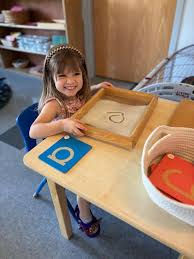

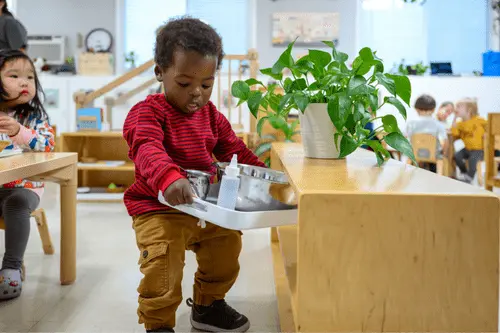

In Montessori education, the classroom is not simply a place where learning happens—it is a carefully prepared environment designed to support the full development of the child. Every material, layout, and detail is intentional, allowing children to move with purpose, make independent choices, and engage in meaningful, self-directed work at their own pace.
From a developmental perspective, structured indoor environments play a critical role in brain development. Neuroscience shows that children build concentration, self-regulation, and executive functioning through repeated, focused activity. In a Montessori classroom, children are given uninterrupted work cycles that allow them to deeply engage with materials, strengthening attention span, memory, and problem-solving skills. This type of focused, hands-on learning supports the development of neural pathways that are essential for academic success and lifelong learning.
Montessori classrooms are intentionally designed to be calm, orderly, and predictable—conditions that support emotional regulation and reduce cognitive overload. This sense of order allows children to feel secure and confident as they explore, make decisions, and take ownership of their learning.
A defining feature of the Montessori environment is the use of specialized, hands-on materials that isolate specific skills in language, mathematics, sensory development, and practical life. Each material is presented with precision and purpose, guiding children through a progression from concrete understanding to abstract thinking. These materials are self-correcting, allowing children to learn through discovery, repetition, and mastery rather than reliance on external correction. This process builds independence, confidence, and intrinsic motivation while reinforcing deeper comprehension.
At Cosmic Minds Fund, Inc., we recognize that indoor classrooms are foundational to developing focus, discipline, and strong academic skills. However, they are most powerful when paired with outdoor, experiential environments that extend learning beyond the classroom. Together, indoor and outdoor spaces create a balanced educational ecosystem that supports the whole child—academically, physically, socially, and emotionally.
Outdoor Classrooms: Building the Future Through Play, Community, and Opportunity
At Cosmic Minds Fund, Inc., we believe that play is not separate from learning—it is the foundation of it. Psychomotor development plays a critical role in a child’s growth, directly impacting physical strength, cognitive development, emotional regulation, and social connection. Through movement, children build not only their bodies, but their minds—refining fine motor skills, strengthening coordination, and developing the foundational abilities needed for language, reading, writing, and problem-solving.
This belief led to the creation of our Community Natural Playground—an outdoor classroom intentionally designed to connect movement, exploration, and learning.
In partnership with the Sidley Austin Foundation, KABOOM!, and Vanguard, alongside Cosmos Montessori and the support of our nonprofit, Cosmic Minds Fund, Inc., we brought this vision to life through a transformational project valued at over $500,000. In a single day, more than 300 volunteers, over 50 local business, came together to build a space that now serves as a dynamic environment for children and families in East Dallas.
What makes this playground truly unique is that it was designed from the ground up by one of our volunteer parents. Every detail was intentionally created to serve children from infancy through lower elementary. The space is thoughtfully divided into developmental zones, allowing children the freedom to choose where and how they engage. Rather than being confined to a single area, children are empowered to explore based on their interests and readiness—an essential component in building independence, confidence, and intrinsic motivation.
This is more than a playground—it is a living ecosystem for learning.
Children engage in meaningful, hands-on experiences where education naturally integrates across disciplines. Mathematics, language, and science come to life outdoors—whether reading beneath a tree, solving problems in real-world settings, or engaging in collaborative play that strengthens communication and critical thinking.
The environment also extends into real-world application. Our lower elementary and early childhood students participate in garden-to-table experiences—growing vegetables, harvesting them, and applying those experiences through practical life activities such as preparing and selling goods. These moments introduce early concepts of economics, responsibility, and sustainability, while also contributing to the ongoing care and maintenance of the environment itself.
Our commitment extends beyond construction. This space represents our dedication to creating safe, enriching, and accessible environments where children can thrive—not just at one school, but across communities.
Our vision is to expand this model to other schools, bringing high-quality, thoughtfully designed outdoor learning environments to more children while ensuring these spaces are maintained and sustained for long-term impact.
Your support makes this possible.
Your donation directly contributes to the expansion, maintenance, and sustainability of environments like this—spaces where children can grow into confident, capable, and compassionate individuals.
Together, we are not just building playgrounds—we are building the future.


